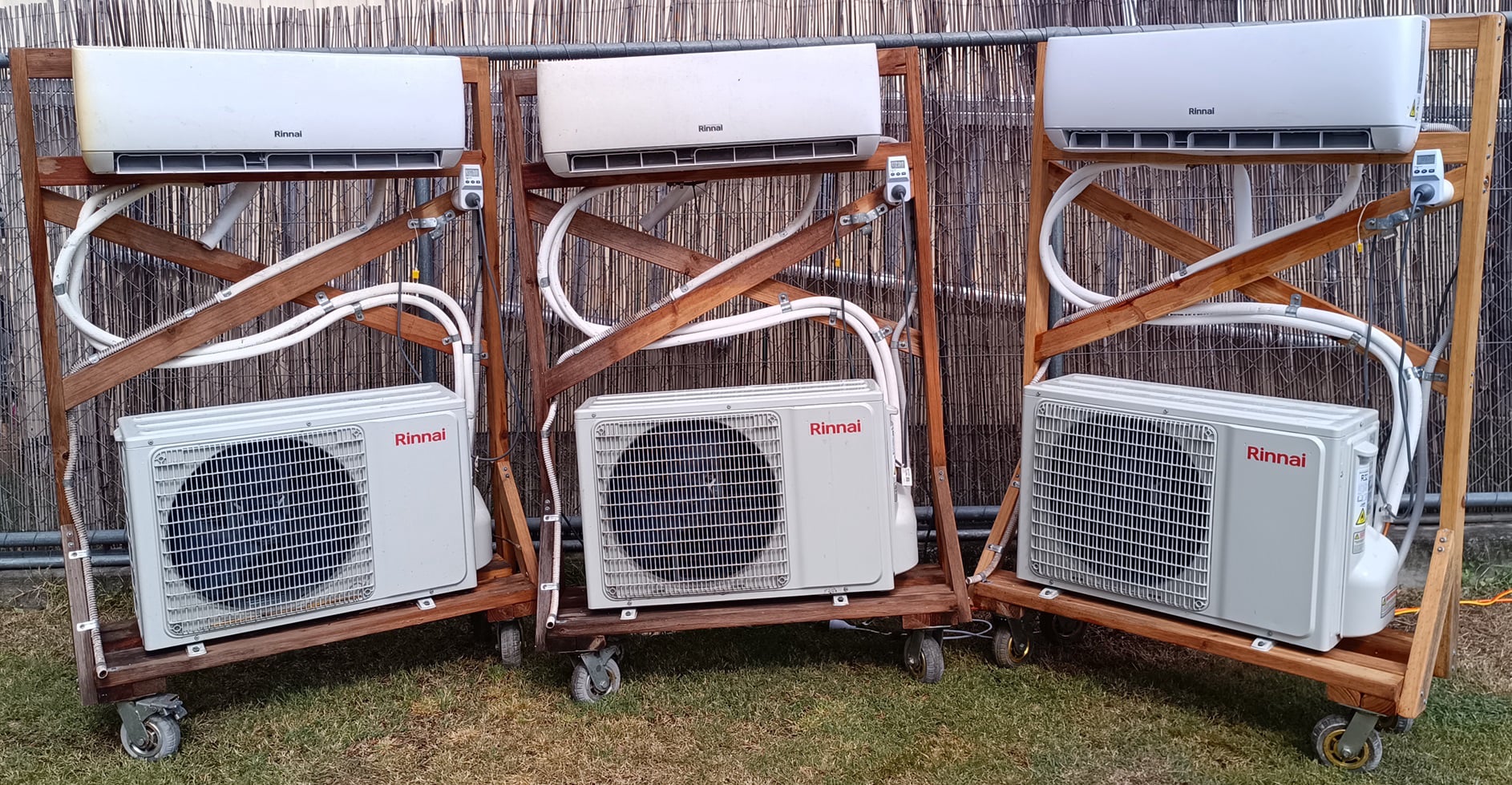
Test demonstration units
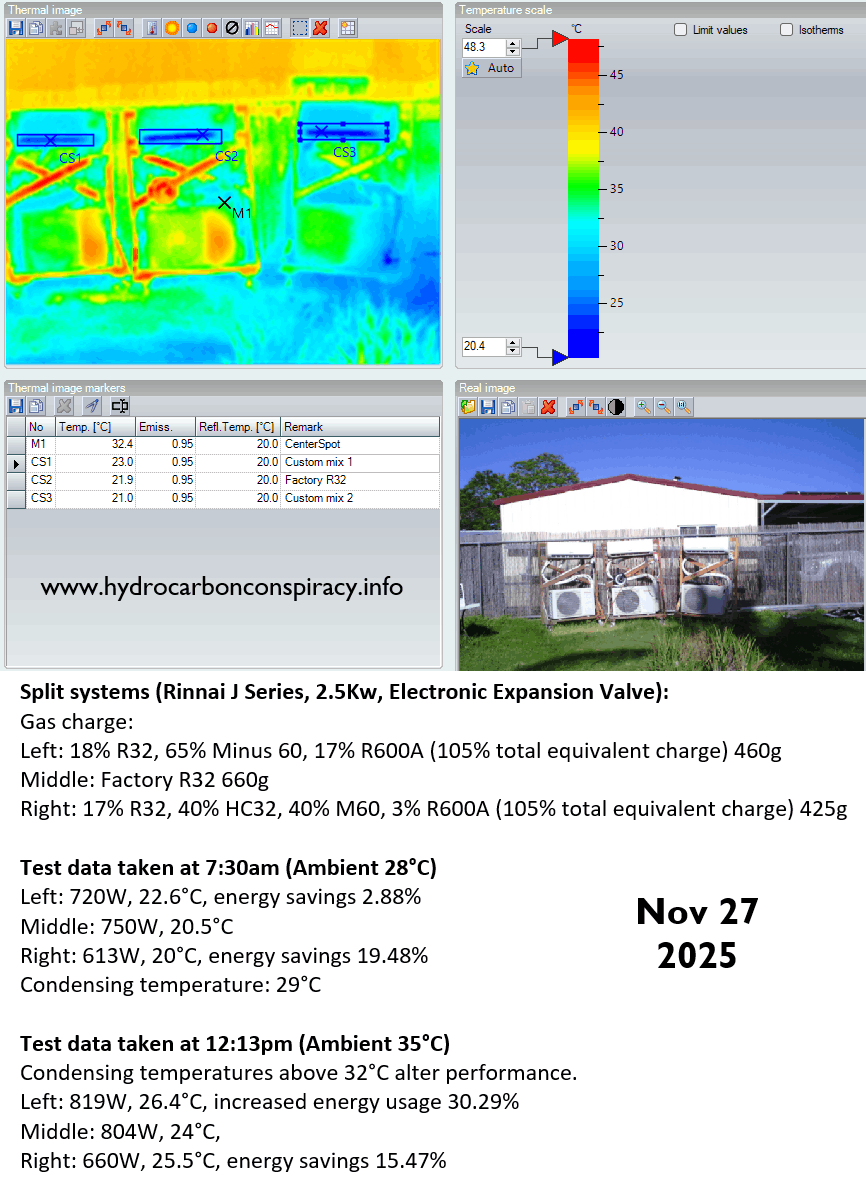
Save on cooling and heating costs with free open source resources.
If you want to save on lighting, you replace halogen and fluorescent bulbs with LED.
If you want to save on air conditioning, you replace the refrigerant gas with a more efficient gas.
Now you may be saying you have solar and battery.
Solar is useless on a rainy day.
Battery is great, even better if you have spare capacity to export to the grid during peak times, or save for use further into the night.
Power prices during peak hour are currently about 40c/KWh and will only continue to rise. You'd be mad not to want to drastically reduce your heating / cooling costs.
The air conditioning refrigerant gas industry and energy goons have done a good job so far in censoring and discrediting these alternative refrigerant gases.
Your air conditioning technician is probably stuck in their old ways and doesn't know how to use these alternative gases.
This site is for raising awareness and giving technicians a crash course.
Hydrocarbon air conditioning isn't the only interesting thing on this website. I have an introduction to other innovations, and information on the meaning of life. Being privileged with such information, it would be wrong not to share it.
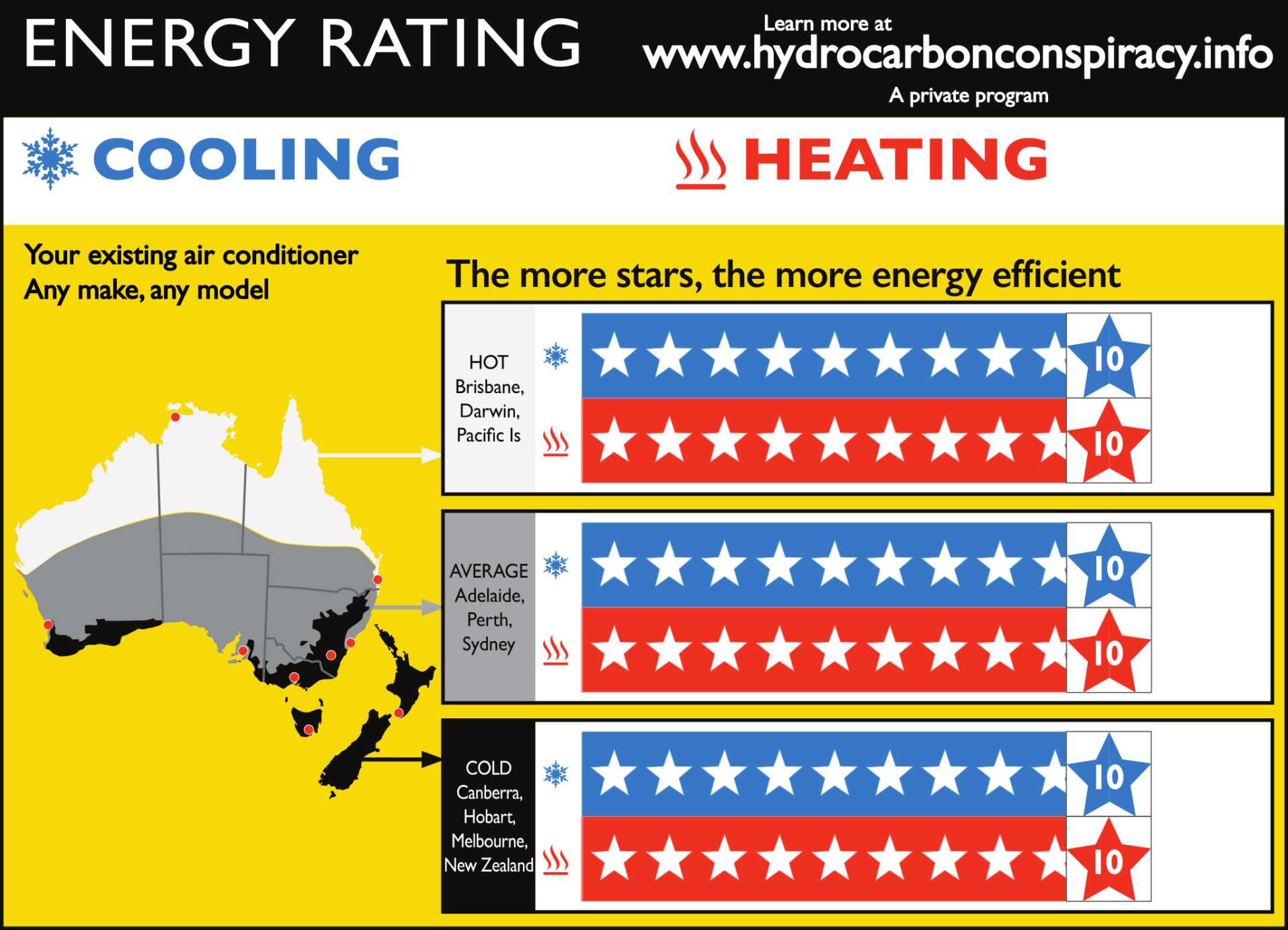
The only air conditioner with a 10 star energy rating is the 2.5Kw Haier Quartz, and it only has a 3 star energy rating for heating. Given my latest test results of 19.48% energy savings below 32°C and 15.47% above 32°C (meaning a universal refrigerant gas, regardless of location), and previously demonstrated heating performance in winter tests, I think this promotional graphic is justified. Keep in mind that a new Hychill product is being developed according to my recommendations, and even better energy savings may be achievable.
I have spent much time and money researching to find the best combinations to suit any air conditioning or refrigeration system (except for Ammonia or Carbon Dioxide based systems).
Where I live, the state government has imposed unreasonable barriers to the legal use of hydrocarbon refrigerants. Every other state in Australia allows competent qualified personnel to use hydrocarbon refrigerant in systems, as long as some basic safety guidelines (and the Australian Standards) are followed. I have decided to make this information freely available as this monster just won't budge.
This information is free to use and share, for personal and commercial use.
Disclaimer: While care is taken to ensure accuracy of the information and information may change slightly, no responsibility is taken for damaged equipment or if you blow anything up. Some technicians (DIYers?) seem to have no idea.